Studying at the Department of Computer Engineering and Software Engineering (GIGL) means joining an engaged, creative and supportive community.
Student committees keep department life active year-round, organizing events that support academic success, networking and a sense of belonging.
New to Polytechnique?
GO-POLY is Polytechnique Montréal's integration program. It guides you through your first steps: computing tools, course registration, housing, insurance and welcome activities. An essential starting point for your first term.
Student committees
CEGInfo and CEGL are the student committees for the computer engineering and software engineering programs. They work closely together and offer the same services to their members. At the graduate level, the AÉCSP represents master's and doctoral students, advocates for their rights within the institution, and organizes social and networking activities.
Computer Engineering
Student Committee (CEGInfo)
Software Engineering
Student Committee (CEGL)

Graduate Students'
Association (AÉCSP)
Services offered by CEGInfo and CEGL:
- Events — activities bringing together students from both programs, plus networking events with partner companies throughout the year.
- SÉPIL — study sessions for info-log students: work on your projects as a group, with free pizza and good coffee.
- Student lounge M-4521 — microwaves, low-cost snacks (coffee, granola bars and more), and a space to meet and unwind.
- Clothing — an annual collection of t-shirts, crewnecks and hoodies in the program colours.
Join the community: Instagram @infolog_poly · LinkedIn · Facebook
Student organizations
Student life at Polytechnique goes well beyond coursework. Two kinds of organizations are waiting for you, several of them tied directly to computer engineering and software engineering:
| Student life committees | Technical societies |
|---|---|
|
|
Students in the spotlight
Our students distinguish themselves well beyond the classroom.
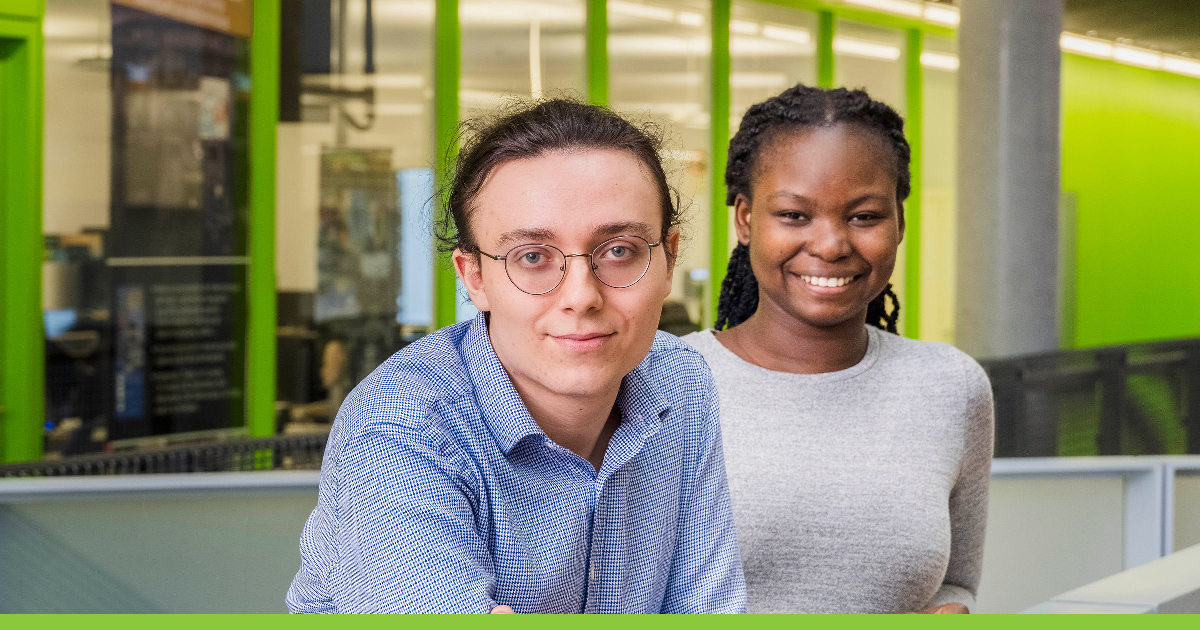 Bintou Seni and Gaetan Butault
Members of PolyAI, they develop artificial intelligence solutions for concrete challenges — from smart waste sorting to object recognition — while asking essential questions about the ethics and social impact of AI.
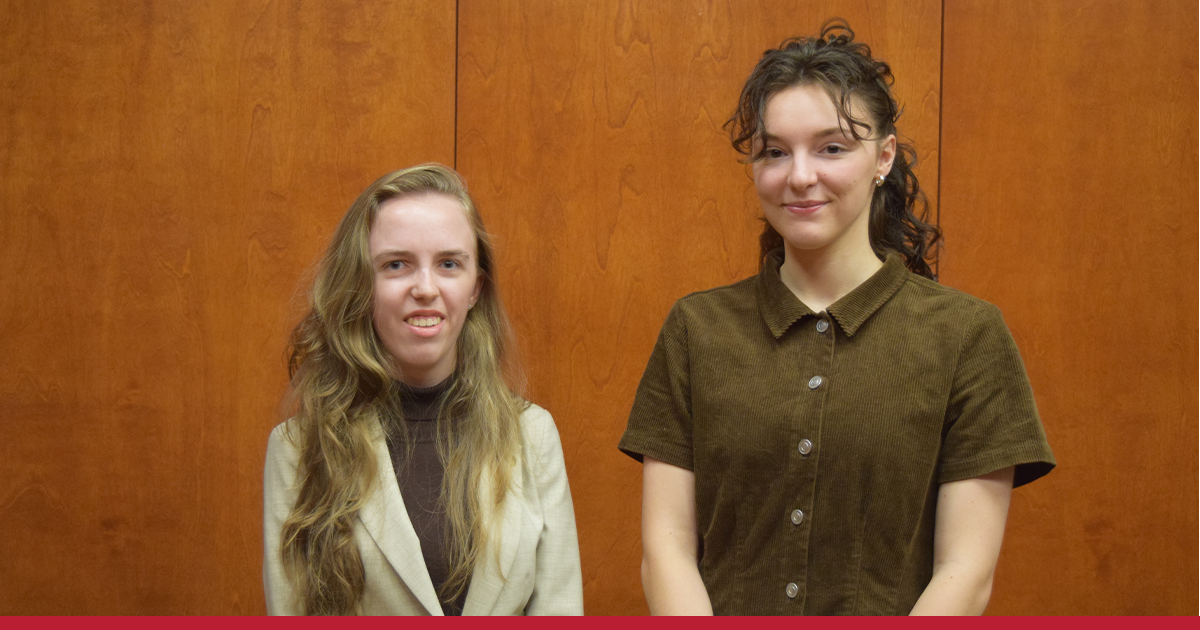 Stefanie Lee Milczarek
A 2024 Schulich Leader scholar, she discovered the creative side of software engineering through a course on algorithms — and has not looked back since.
 Michael Roussel
He helped create a video game for learning the Innu language, in collaboration with Laval Virtual — a demonstration that software engineering can generate profound social impact.