

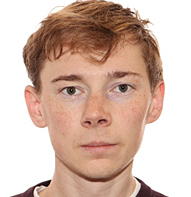
 I am a postdoctoral fellow in the Department of Mechanical Engineering at Polytechnique Montréal. I obtained my PhD in Nuclear Engineering from the Faculty of Nuclear Sciences and Physical Engineering at the Czech Technical University in Prague. My doctoral research focused on the measurement and characterization of secondary neutron spectra produced around cyclotrons used to produce PET radiopharmaceuticals.
During my PhD studies, I completed a research internship at CEA Saclay in France, where I contributed to the development of low-energy neutron physics models in the Geant4 Monte Carlo code. Today, I combine my experience in neutron physics, charged-particle interactions, and radiation transport simulations in my current research on deterministic proton transport methods. The goal of this work is to enable faster and more accurate calculations for proton therapy treatment planning, helping to make advanced cancer treatments more accessible to patients.
Why did you participate in the MR180?
I decided to participate in MR180 for several reasons. First, I was attracted by the challenge of explaining my research to a general audience in only three minutes, something I had never tried before. I also saw it as an opportunity to improve my science communication and public speaking skills. Finally, I must admit that the possibility of winning a cash prize was an additional motivation, especially given the relatively small number of participants. Overall, I thought it would be a fun and rewarding experience, regardless of the final result.
What was your impression?
The experience was both exciting and challenging. Explaining years of research in only three minutes forces you to focus on what truly matters and to see your work from the audience’s perspective. It was also inspiring to discover the diversity of research conducted by fellow postdoctoral researchers.
The pros and the cons of that competition?
The main advantages of the competition were the opportunity to improve science communication skills, gain confidence in public speaking, and learn how to explain complex research topics to a general audience. It also encouraged participants to focus on the broader societal impact of their work rather than only on technical details. In addition, it was interesting to discover research conducted in other disciplines and to exchange experiences with fellow researchers. The main drawback was that preparing a high-quality three-minute presentation required a considerable investment of time and effort, which inevitably took some time away from ongoing research activities. I also think that a larger number of participants would create even more opportunities for interaction and the exchange of ideas across different fields.
What method did you use to explain your thesis in three minutes?
I used a storytelling approach built around a real-world problem: how to destroy a tumor while protecting healthy tissue. Instead of focusing on mathematical details, I relied on simple analogies, visual explanations, and concrete examples to explain both proton therapy and the computational challenges behind it. My goal was to make the audience understand not only what I do as a researcher, but also why it matters for future cancer patients.
If you had to dedicate your research to someone (past, present, or future), who would it be and why?
I would dedicate my research to my grandfather, who always supported and encouraged me throughout my education and scientific career. His belief in me gave me the confidence to pursue ambitious goals, and I would not be where I am today without his support.
Three keywords to describe your research
proton therapy, deterministic transport, nuclear data
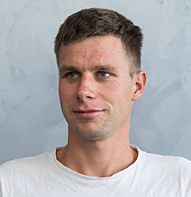 Jakub Liska received his B.Sc. and M.Sc. degrees in electrical engineering from the Czech Technical University in Prague, Czech Republic, in 2019 and 2021, respectively. He received his Ph.D. in radioelectronics from the same university in 2026. He is currently pursuing postdoctoral research at Polytechnique Montréal. His research interests include electromagnetic field theory, fundamental bounds, computational electromagnetics, numerical and convex optimization, numerical techniques, and eigenproblems.
Why did you participate in the MR180?
My motivation was to gain new experience, improve my skills in communicating my research, and meet new people.
What was your impression?
I found it to be a really challenging task.
The pros and the cons of that competition?
- Pros: The valuable feedback provided during the rehearsal session.
- Cons: The short gap of just one day between the rehearsal and the actual competition.
What method did you use to explain your thesis in three minutes?
I relied on pure analogy to explain my research, almost entirely avoiding the intricate details of my exact theoretical work.
What inspired your research topic?
I have been working on my research topic since my bachelor's studies. It has been a long, progressive journey filled with many challenges, which is exactly what I enjoy about it.
If you had to dedicate your research to someone (past, present, or future), who would it be and why?
I dedicate my work to engineers—to assist them in their everyday work and help them avoid blind paths.
Three keywords to describe your research
- Computational Electromagnetism
- Optimization
- Inverse Design
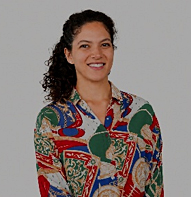 Nairouz is a Postdoctoral Researcher at Polytechnique Montréal within the PolyShape Lab, under the supervision of Professor Hervé Lombaert. She began her career working at the Magdi Yacoub Heart Foundation in Egypt, where her passion for cardiovascular clinical solutions was ignited. She then earned her PhD. from Imperial College London, UK, pioneering the use of Graph Neural Networks (GNNs) for 3D anatomical shape analysis. Currently, her postdoctoral research focuses on developing advanced AI models to accurately estimate complex 3D aortic shapes and blood flow patterns from limited 2D clinical scans to improve early disease detection.
Why did you participate in the MR180?
I participated to challenge myself to strip away complex mathematical jargon and translate engineering research into a simple, relatable story. As AI integrates deeper into healthcare, it is crucial to explain exactly how these models help clinicians and benefit patients in everyday language.
What was your impression?
It was a very positive and rewarding experience. It was interesting to see how my peers at Polytechnique managed to condense highly technical work from different domains into just three clear minutes.
The pros and the cons of that competition?
- Pros: It forces a massive leap in communication skills, offers high visibility to your research lab, and serves as an excellent networking platform with other innovative minds.
- Cons: The extreme time pressure! Condensing complex architectural concepts such as training a model to reconstruct 3D anatomy from a single 2D slice, into exactly 180 seconds means you must sacrifice technical nuances that you love.
What method did you use to explain your thesis in three minutes?
I used a visual analogy framework. To explain how an AI model can reconstruct an entire 3D organ from just a flat 2D slice, I compared it to how a human brain recognizes a bicycle. If a bicycle is partially hidden behind a truck, your brain can still easily guess the rest of its shape because you've seen many bicycles before. I explained that my model works the exact same way, learning from many examples to reconstruct a patient's complete 3D aorta from limited data.
What inspired your research topic?
The inspiration came from my time at the Magdi Yacoub Heart Foundation, combined with several brainstorming sessions with my supervisor, Professor Hervé Lombaert. We wanted to address the inherent technical limitations of standard 2D clinical scans, which can overlook early 3D warning signs in the aorta. This motivated us to develop AI tools that reconstruct this missing 3D information to support clinicians in early disease detection.
If you had to dedicate your research to someone (past, present, or future), who would it be and why?
I would dedicate it to both the clinicians striving for better diagnostic tools and the cardiac patients awaiting answers. My goal is to ensure that every line of geometric code we optimize translates into clearer insights for medical professionals and a better quality of life for patients.
Three keywords to describe your research
- 3D Aortic Reconstruction
- Geometric Deep Learning
- Early Cardiovascular Detection
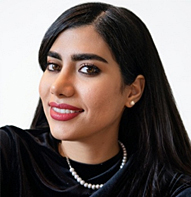 Fatemeh Erfan holds a Ph.D. in Cybersecurity from Polytechnique Montréal, Canada, where her thesis was nominated for the Best Thesis Award. She is currently a Postdoctoral Fellow at Polytechnique Montréal, working in collaboration with Google and the Interdisciplinary Research Center on Cybersecurity and Cyber Resilience (IMC2).
Her current research focuses on sustainable cybersecurity, IoT security, green large language models, intrusion detection systems, and the design of efficient AI-based security mechanisms. Her doctoral research addressed the security of blockchain-based networks and applications against large-scale cyberattacks and smart contract vulnerabilities, including eclipse attacks, selfish mining, Sybil attacks, and Ethereum smart contract vulnerabilities.
More broadly, her research interests include cybersecurity, blockchain security, machine learning, federated learning, and large language models, with an emphasis on developing reliable, scalable, and energy-efficient security solutions for decentralized and intelligent systems.
Why did you participate in the MR180?
I participated in the MR180 because I wanted to challenge myself to explain a complex research topic in a clear way. As researchers, we often present our work to specialized audiences, but MR180 offers the opportunity to communicate with a broader public. It helped me reflect on the real-world impact of my research and explain why my research matters beyond the technical details.
What was your impression?
My impression was very positive. The competition was challenging because summarizing years of research in only three minutes requires careful selection, clarity, and practice. At the same time, it was a valuable experience because it pushed me to focus on the main message of my work: AI should not only be powerful, but also energy-efficient and environmentally responsible.
What are the pros and cons of that competition?
One of the main advantages of MR180 is that it helps researchers improve their communication skills and make their work understandable to a non-specialist audience. It also encourages us to think about the broader social and environmental relevance of our research.
The main challenge is the strict time limit. Three minutes is very short, especially for a technical topic. It requires simplifying the content without losing the scientific meaning. However, this difficulty is also what makes the exercise useful.
What method did you use to explain your thesis in three minutes?
I used a problem–solution–impact structure. I started with a concrete example to make the topic relatable and to capture the audience’s attention. Then, I introduced the main research problem in simple terms, avoiding unnecessary technical details. After that, I explained my proposed approach step by step, using clear language and accessible examples. Finally, I concluded with the main results and the broader impact of the research, so the audience could understand not only what I did, but also why it matters.
What inspired your research topic?
My research topic was inspired by the rapid growth of artificial intelligence and the increasing environmental cost of training and fine-tuning large models. AI is becoming part of everyday life, but its energy consumption and carbon emissions are often invisible to users. As a cybersecurity researcher working on sustainable technologies, I wanted to explore how we can design AI systems that are not only effective and secure, but also environmentally responsible.
If you had to dedicate your research to someone, who would it be and why?
I would dedicate my research to future generations. They will live with the consequences of the technologies we design today. If we want AI to support society in the long term, we need to make it more sustainable, responsible, and energy-efficient. My research is a small contribution toward building intelligent systems that do not come at the cost of the planet.
Three keywords to describe your research
- Sustainable AI
- Cybersecurity
- Energy efficiency
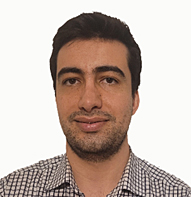 Poorya Mirzavand Borujeni is a postdoctoral researcher in Chemical Engineering at Polytechnique Montréal. He received his PhD from McGill University, where his research focused on bioinformatics and data analysis. He also holds a Master's degree in Bioprocess Engineering and a Bachelor's degree in Biotechnology from Iran. His current work applies machine learning and soft-sensor technologies to improve bioprocess monitoring and control.
Why did you participate in the MR180?
Throughout my academic and professional experiences, I have often found myself in situations where I had only a limited amount of time to explain my research or project. MR180 provided an excellent opportunity to further develop and refine this important communication skill.
What was your impression?
One of the key lessons I learned was how significantly the quality of a presentation improves through practice and repetition. The experience showed me the value of concise communication, and I would participate again in the future to further improve my ability to present research effectively to diverse audiences, including potential employers and collaborators.
What are the pros and cons of this competition?
The main advantage of the competition is that it encourages presenters to communicate complex ideas clearly and efficiently. Because of the strict time limit, participants must focus on the most important aspects of their work and explain them in an accessible way. On the other hand, the time constraint can also be somewhat stressful, especially when trying to balance clarity, accuracy, and completeness within three minutes.
What method did you use to explain your thesis in three minutes?
I relied on descriptive and intuitive visual elements to help communicate my ideas. Using carefully selected images allowed me to illustrate key concepts quickly and make the presentation more engaging and easier to follow.
What inspired your research topic?
In my daily life, I regularly reflect on my performance and think about how I can learn from past mistakes and experiences. I approach research in a similar way. By analyzing historical experimental data, I look for patterns and insights that can help improve the design and outcomes of future experiments. This mindset naturally led me to research in data-driven process optimization and machine learning.
If you had to dedicate your research to someone (past, present, or future), who would it be and why?
I would dedicate my research to my wife. Her unwavering support, encouragement, and belief in me have helped me overcome challenges and stay motivated throughout my academic journey.
Three keywords to describe your research
- Bioreactor
- Machine Learning
- Soft Sensor
